You Don't Need a New You. You Need a Kinder One.
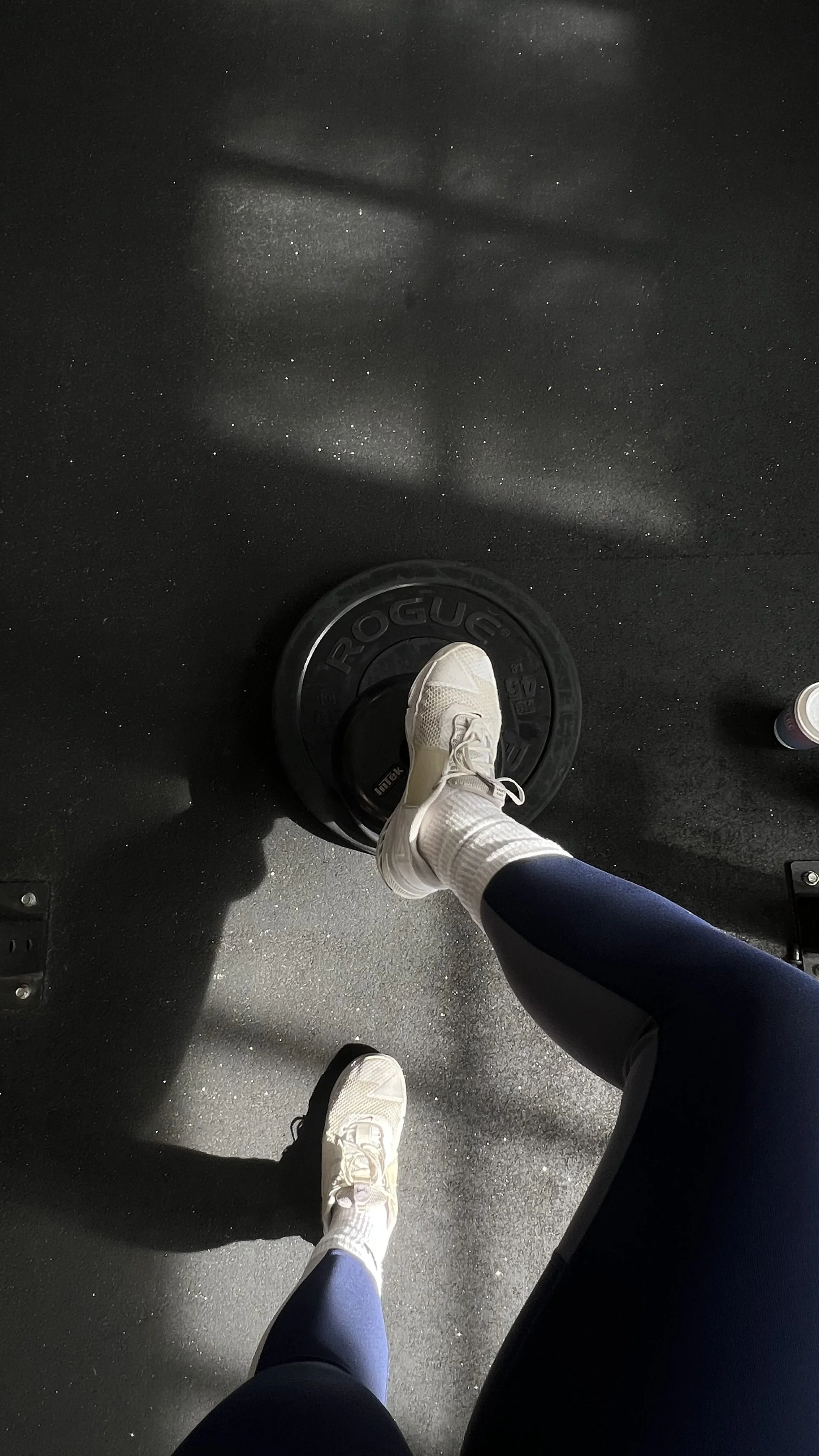
January has a way of amplifying everything.
The hope for change. The pressure to be better. That voice in your head insisting this is finally the month you get your sh*t together and become the New You — one who wakes up at 5 a.m., never misses a workout, and has boundless motivation at all times.
Last January, I decided I was going to dedicate at least 10 hours a week to Hello Happy. I'd publish 3-4 blog posts weekly, create and schedule monthly newsletters, show up consistently on social media, all while working my full-time job as a product designer. I had a whole vision: content calendars, design templates, a posting schedule that would make any social media manager proud.
But then I'd sit down to actually start and immediately, my brain would spin out. Okay, so first I need to make the content calendar. But wait, I need templates designed before I can plan posts. Actually, I should research trending topics first. Oh god, and I need to draft everything, edit it, schedule it all out...
I'd feel my anxiety start to rise. The list would get longer, and the mountain to this version of the Perfect Me would get steeper.
And so I'd end up just... not doing any of it.
I've noticed this pattern in myself a lot—when I set big, lofty goals, the gap between who I am today and who I'm trying to become feels so wide. And instead of motivating me, it sparks this full-body anxiety about the effort, the time, and all of the consistency it will require. Suddenly, even one small step forward feels pointless.
So I freeze. Between our nervous system response of fight, flight, or freeze, I usually freeze. And I stay exactly where I am and berate myself for not making an effort, and then I feel like shit for being mean to myself… it’s a whole cycle.
If that sounds familiar, you're not lazy or broken. You're just human.
Here's what I think we get wrong about change: we assume progress should feel linear. Something that’s predictable and visible right away. We expect our effort to be rewarded immediately, and when it's not, we conclude that we're failing—or worse, that this change we’re aiming for just isn't meant for us.
Progress Compounds (Even When You Can't See It)
But that's so not how growth actually works.
Progress compounds: Quietly. Invisibly. And then all at once.
James Clear talks about this in one of my favorite books, Atomic Habits—the idea that if you get just 1% better each day, those tiny improvements don't add up, they multiply. What feels lame and insignificant today becomes transformative over time. Each individual step may not feel drastic or singularly impressive, but small, consistent actions like these create momentum over time because beneath the surface, things are shifting and foundations are being laid.
Think about how real change actually shows up in your life: rarely all at once, right? More often, change happens gradually—then suddenly. You don't wake up one morning transformed; you wake up after weeks or months of small, ordinary choices, until they finally reveal themselves all at once and you notice that damn you actually have that 6-pack of abs that you’ve been working for!
The Problem Isn't You—It's Your Expectations
The problem has never been that we're incapable of change; as humans, change is in our DNA. It's that we demand too much from ourselves far too quickly.
We aim for perfection instead of sustainability. We go all in, burn out, and then beat ourselves up for not being able to maintain an unrealistic pace. We forget that, to evolve, our bodies and brains need safety, trust, and repetition—not pressure. That's why starting small shouldn’t be considered lowering the bar on your expectations. Instead, think of it as building credibility with yourself.
Another thing you should never wait around for before you get started is motivation. It’s not this magical thing that will flit across your mind or consciousness one day and you’ll suddenly feel ready to do The Thing you’ve been putting off forever. Motivation doesn’t come before action; action creates motivation. When you prove to yourself—again and again—that you can show up in small ways, your nervous system relaxes and your brain begins to believe you.
The Power of Starting (Laughably) Small
I have a pillbox that sits in the cabinet above my coffee maker. Every morning, I'm supposed to take my pills. And every morning, there's this weird resistance. It's not about the pills themselves—or, at least, it’s not just that (I hate taking pills). It's the mental friction of starting. Of opening the cabinet, grabbing the box, opening all the little compartments, etc.
My therapist, who works a lot with ADHD and executive dysfunction, gave me the simplest reframe when I told her about this weird “thing” of mine. She asked me: "What's the smallest possible action you could take toward taking your meds? What is the first, almost laughably easy step? Could you just open the cabinet? Could you just hold the bottle?”
And you know what happens almost every time now? Opening the cabinet turns into grabbing the pillbox. Grabbing it turns into opening one compartment. One compartment turns into taking the pills. Not because I forced myself, but because I lowered the barrier to entry so much that my brain didn't panic and start reminding me how much I hate taking meds.
And I fully recognize this can feel a little dumb or ridiculous! Because duh, I can open a cabinet door and hold a bottle in my hand. But that’s actually the point! Because why would I open my cabinet door and just walk away? The next step—grabbing the bottle, opening the compartment, putting pills in my mouth—feels more natural once I get that intimidating first step out of the way.
This is how momentum gets built. Not through discipline or self-punishment, but through kindness and strategy.
When Even Small Steps Feel Too Big
And listen, there are still days when even the smallest step feels too big. There are absolutely days when I slip back into all-or-nothing thinking and decide that if I can't dedicate three focused hours to Hello Happy, I might as well not do anything at all. Days when this whole approach feels like it's not working fast enough, or maybe not working at all. That's okay. It's part of the process. What helps me on those days is remembering that I'm not trying to be perfect. I couldn’t be if I tried. Instead, what I’m trying to do is collect evidence. Evidence that I'm capable, that I can show up, even imperfectly, and still be moving forward in the right direction.
So if you're feeling stuck right now with where you are and where you’re trying to go, here's what I'd suggest:
Ask yourself what the smallest possible action is. Do only that. Stop if you want to. Continue if you can. Both count.
Because every time you show up—even when it feels small, even when it feels dumb or silly—you're building something. You’re teaching your body that change doesn't have to be overwhelming.
So please know this year, you don't need a New You, more willpower, or a total life overhaul.
You just need permission to start where you are and patience with the season you're in. And always remember this: you can do hard things—but you don't have to do them all at once.
Be kind to yourself. The rest will follow.